
Yes, you can freeze oranges, lemons,limes and grapefruits to save money and reduce waste.
The trade-off is texture: once frozen and thawed, citrus becomes soft. Because of that, the best freezing method depends on how you plan to use the fruit later, eating it, blending it, or cooking with it.
Use this quick guide to choose the right approach:
| If You Want… | Do This | Why It Works |
| Best taste & usable texture | Freeze citrus segments in light syrup | The syrup protects the fruit during freezing, helping it hold its shape and flavor |
| Fast, easy storage | Freeze whole or cut citrus in a freezer bag | Perfect for smoothies, juicing, and cooking where texture doesn’t matter |
| Maximum flavor for recipes | Freeze zest and juice separately | Zest and juice freeze extremely well and keep their flavor |
Why Freezing Citrus Changes Texture (and Why That’s Okay)
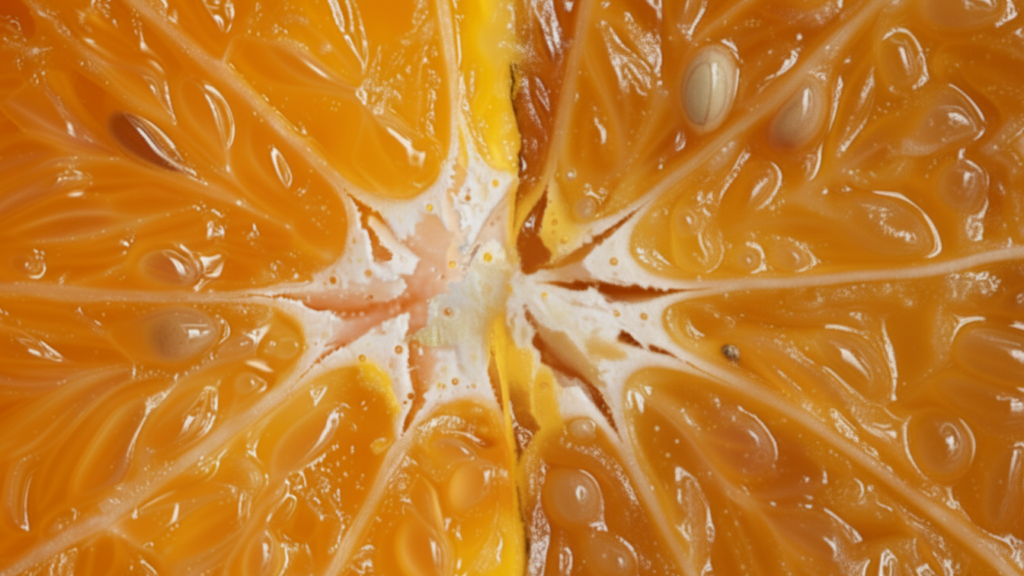
Freezing citrus doesn’t destroy flavor, it changes structure.
Citrus fruits are made up of tiny, water-filled cells. When those cells freeze, the water inside them expands into ice crystals.
Those crystals rupture the cell walls, which is why thawed citrus feels softer and releases more juice. How to Freeze Fruits – University of Missouri Extension
This happens to all fresh citrus, regardless of variety.
What Freezing Does (and Doesn’t Do)
| Aspect | Effect |
| Texture | Changes permanently (soft, juicy, sometimes mushy) |
| Flavor | Largely preserved |
| Acidity | Preserved |
| Aroma Oils (Zest) | Extremely stable when frozen |
In other words, freezing doesn’t ruin citrus, it simply changes how it behaves after thawing.
Why Some Parts Freeze Better Than Others
Not all parts of a citrus fruit are built the same:
| Citrus Part | Composition | Freezing Result |
| Flesh (Segments) | High water content | Most texture loss |
| Juice | Already liquid | Freezes perfectly |
| Zest | Mostly aromatic oils | Freezes exceptionally well |
This is why freezing whole fruit or slices works best when your end goal is juicing, blending, or cooking, while zest and juice can be frozen with almost no downside.
Once you understand that freezing affects texture more than flavor, choosing the right freezing method becomes straightforward.
That choice, dry pack or syrup, is what determines how useful your citrus will be later.
Two Ways to Freeze Citrus (And When to Use Each)
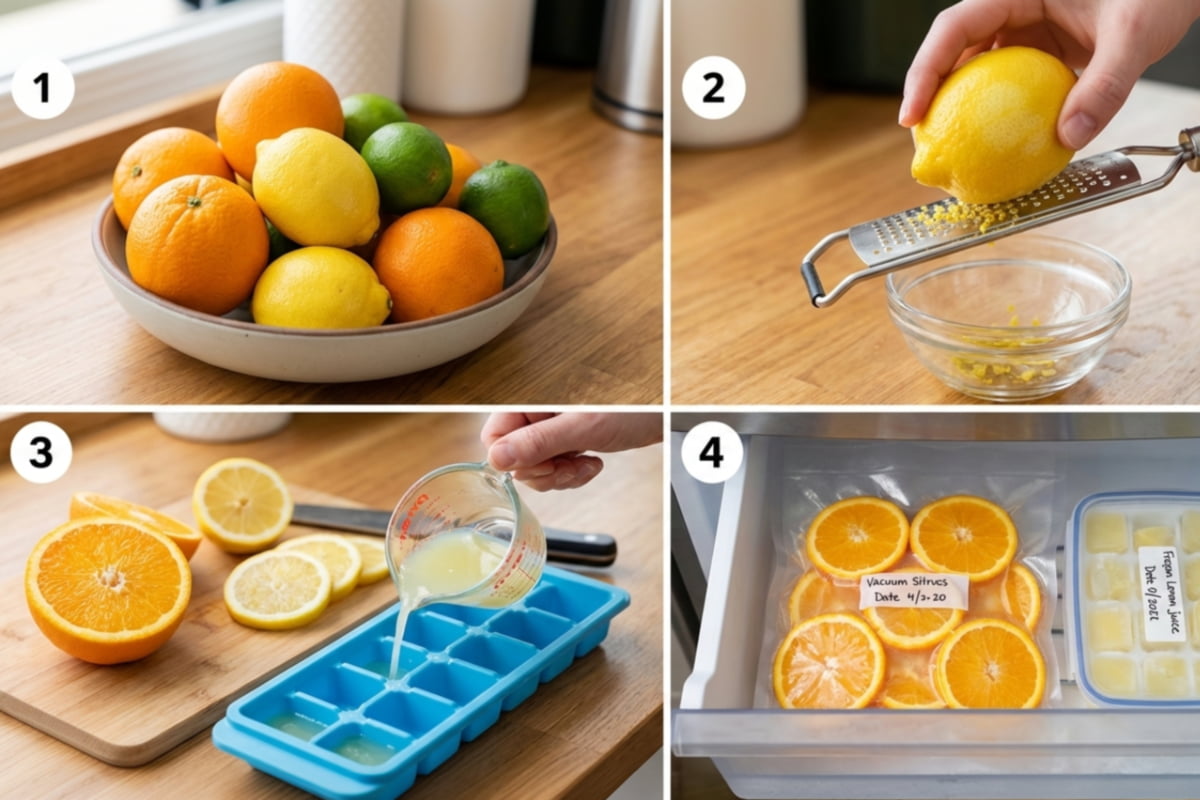
Two Ways to Freeze Citrus (And When to Use Each)
There are two reliable ways to freeze citrus. The right choice depends entirely on how you plan to use the fruit later: Dry Packing (for flavor/juice) or Syrup Packing (for texture).
1. The Dry Pack Method (Simplest)
| Category | Recommended Use Case |
| Primary Use | Smoothies, juicing, baking, sauces, and zest. |
| Trade-Off | Thawed citrus flesh will be soft and watery, not suitable for fresh eating or garnish. |
How it Works: With this method, oranges, lemons, and limes are frozen without any added liquid. Texture changes after thawing, but flavor remains intact.
While the texture will be soft upon thawing, the flavor is preserved perfectly.
Why Use It: This aligns with established guidance from the University of Georgia Extension, which recommends dry packing for fruits intended for cooking or processing rather than fresh eating.
Instructions:
- Wash and Dry: Clean the fruit thoroughly.
- Prep:
- For Juice: Freeze whole or halved.
- For Zest: Zest the fruit before freezing (it’s harder to zest once frozen).
- For Smoothies: Peel and quarter the fruit.
- Pack: Place in airtight freezer bags, squeezing out as much air as possible.
- Freeze: Label and freeze immediately.
- Later Use: Thaw whole fruit for juicing, or use frozen lemon and lime zest and juice directly in recipes.
2. The Syrup Pack Method (Best Texture)
| Category | Recommended Use Case |
| Primary Use | Smoothies, juicing, baking, sauces, and zest. |
| Trade-Off | Thawed citrus flesh will be soft and watery, not suitable for fresh eating or garnish. |
How It Works: Citrus segments are frozen fully submerged in a light sugar syrup. The syrup helps protect the fruit’s structure during freezing, reducing moisture loss and limiting cell damage.
This method takes more effort but produces better results when you want citrus pieces to stay intact after thawing. Freezing Citrus Fruits – National Center for Home Food Preservation.
Instructions:
- Later use: thaw in the refrigerator and use where intact citrus pieces matter.
- Prep the Fruit: Peel the citrus (Oranges, Mandarins, etc.) and separate it into neat segments, removing as much white pith as possible.
- Make Syrup: Create a light syrup by dissolving 1 cup of sugar in 4 cups of water (20% syrup). , stirring until dissolved and cooling completely. National Center for Home Food Preservation.
- Pack and submerge: place segments in a rigid, airtight container and cover fully with syrup.
- Seal and freeze: leave about ½ inch of headspace, label, and freeze.
Citrus-by-Citrus Freezing Guide (Quick Comparison)

| Citrus Fruit | What Freezes Best | Best Freezing Method | What to Expect After Thawing | Best Uses |
| Oranges | Juice, segments | Dry pack (juice), syrup pack (segments) | Flesh softens, juice releases easily | Smoothies, sauces, baking |
| Lemons | Zest, juice | Dry pack | Zest holds aroma extremely well | Baking, marinades, curds |
| Limes | Juice, zest | Dry pack | Aroma slightly more delicate than lemon | Drinks, desserts |
| Tangerines / Mandarins | Segments, juice | Syrup pack (segments) | Very soft without syrup | Desserts, cooking |
| Grapefruit | Juice, segments | Dry pack (juice), syrup pack (segments) | Flesh softens significantly | Juicing, cooking, desserts |
How Long Frozen Citrus Lasts (and How to Thaw It Properly)
Freezing citrus is forgiving, but quality still depends on how long it’s stored and how it’s thawed. Use the guidelines below to keep flavor high and avoid unnecessary texture loss.
How Long Citrus Keeps in the Freezer
| Citrus Form | Best Quality Window | Still Safe After |
| Whole citrus | 2–3 months | Up to 6 months |
| Citrus juice | 3–4 months | Up to 12 months |
| Zest | 4–6 months | Up to 12 months |
| Syrup-packed segments | 2–3 months | Up to 6 months |
These are quality guidelines, not safety cutoffs. Citrus doesn’t spoil easily in the freezer, but flavor and aroma slowly fade over time, especially zest.
How to Thaw Citrus (Based on How You’ll Use It)
The biggest mistake people make is thawing citrus too early or too aggressively. In many cases, thawing isn’t needed at all.
Thawing for Juice
- Thaw the container of juice or fruit pieces either in the refrigerator or at room temperature.
- The juice will release easily once the fruit softens.
- Always stir well after thawing to recombine any natural separation that occurs during freezing.
Thawing for Zest
- Do not thaw the zest. Use it directly from the freezer in baking or cooking.
- Using frozen zest preserves its maximum aroma and prevents it from clumping into a sticky mess.
Thawing for Syrup-Packed Segments
- Thaw slowly in the refrigerator to maintain the best texture.
- Keep the segments fully submerged in the syrup until you are ready to use them.
- Drain the segments just before serving or adding them to a recipe.
Thawing Whole Citrus
- Thaw whole citrus slowly in the refrigerator until the fruit is soft.
- This is best used immediately for juicing or cooking, as the texture will be too compromised for slicing.
When Not to Thaw at All
Frozen citrus works best straight from the freezer for:
- Smoothies
- Sauces and reductions
- Baking (zest and juice)
- Marinades
In these cases, thawing only adds moisture loss and mess.
Signs Frozen Citrus Is Past Its Prime (Quality Check)
- Smell: Frozen citrus should still smell clean and citrusy. Discard if the zest smells flat or musty, or if the juice has absorbed off-odors.
- Color: Discard if the color has dulled dramatically or changed significantly.
- Dilution: Syrup-packed fruit that tastes very diluted or watery has likely lost too much quality.
Food Safety Note: Food kept frozen continuously at 0°F will always be safe, but quality degrades over time. For detailed information on frozen food safety and shelf life, consult the USDA’s Freezing and Food Safety guide.
Expert Tips & Common Mistakes When Freezing Citrus
These are the small details that make frozen citrus taste intentional instead of “just okay.” None of them are complicated, they’re just things you only learn after doing it a few times.
Zest Before You Freeze (Always)
Zesting frozen citrus is possible, but awkward and messy.
If you think you might want zest later, take it before freezing, even if you’re not sure how you’ll use it yet.
Frozen zest keeps far better than frozen peel and gives you maximum flexibility.
Freeze Juice in Small Portions
Large containers of frozen juice are inconvenient to thaw and easy to waste.
Instead:
- Freeze juice in ice cube trays or small containers
- Portion sizes stay usable
- Flavor stays brighter because thaw time is shorter
This matters most for lime and lemon juice, where freshness is noticeable.
Air Is the Real Enemy
Freezer burn isn’t about cold, it’s about exposure to air.
- Remove as much air as possible from bags
- Use rigid containers for syrup-packed segments
- Repackage tray-packed fruit once frozen
If citrus tastes flat after thawing, air exposure is usually the reason.
Label More Than the Date
We’re human. Three months from now, “Lemon – Jan” won’t mean much.
A slightly clearer label saves you from guessing later. Something like:
- Lemon zest – baking
- Lime juice – drinks
- Orange segments – syrup
That’s usually enough to jog your memory and use it instead of forgetting it.
Don’t Expect Fresh Texture, Plan Around It
Frozen citrus works best when:
- Texture doesn’t matter
- Flavor does
If you plan for juice, cooking, baking, or blending, frozen citrus performs beautifully.
If you plan for fresh slices, it will disappoint, and that’s not a failure of the method.
Avoid Refreezing Thawed Citrus
Each freeze–thaw cycle pulls out moisture and kills the flavor.
If you thaw more than you need:
- Use the rest the same day
- Or incorporate it into cooking
Refreezing is safe, but quality drops fast.
Final Word: How to Freeze Citrus With Confidence
Freezing citrus isn’t about preserving perfection, it’s about preserving usefulness.
Match the fruit to the method, prep it with intention, and use it where frozen citrus shines: juice, zest, cooking, and baking. When you do, you’ll waste less, save money, and always have citrus flavor ready when you need it.
If you found this helpful, you might also like my guides on freezing other foods, from baked goods to sauces and pantry staples.
Have a question about a specific citrus or a freezing scenario I didn’t cover? Leave a comment, those questions often turn into the next guide.
